
Asian ICAS Consensus
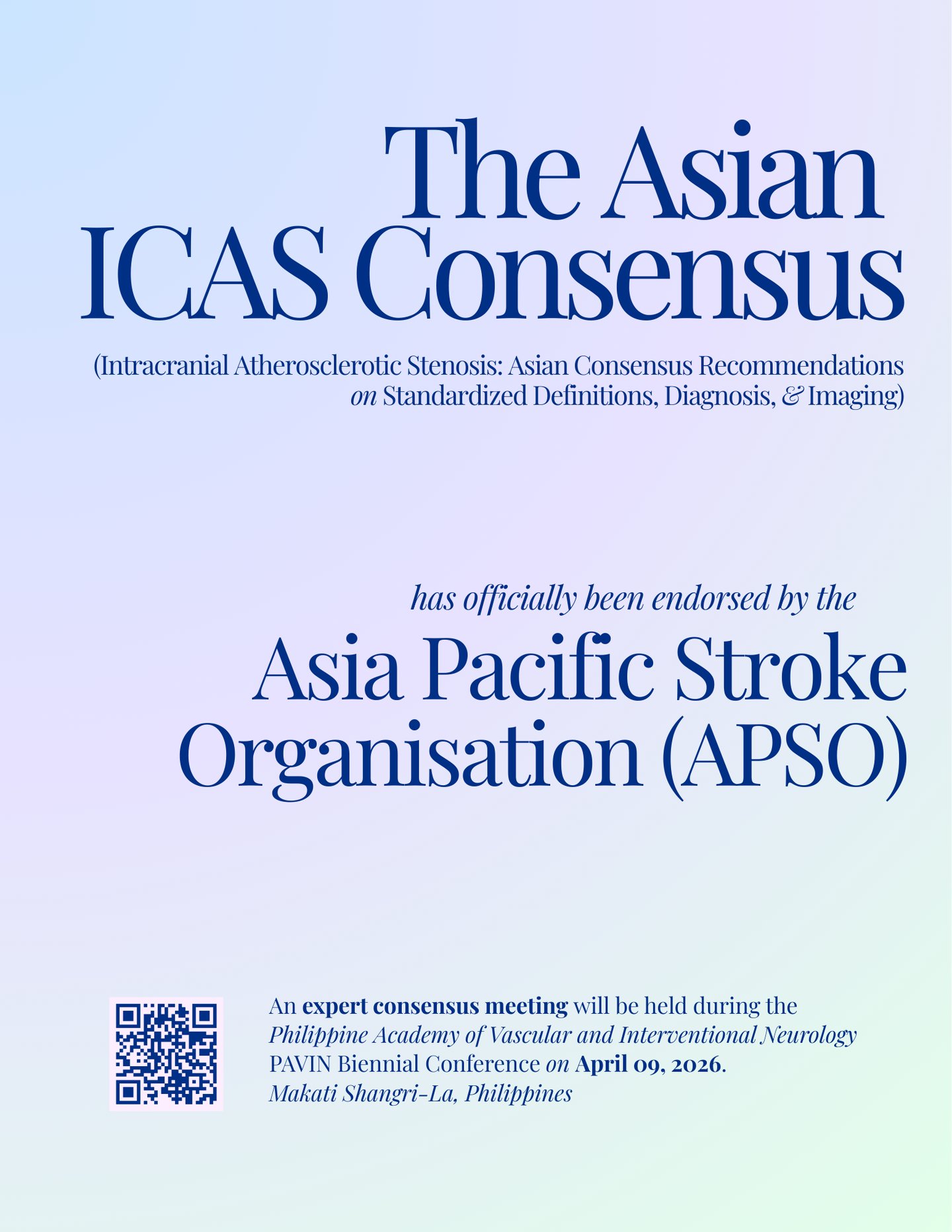
The Asian ICAS Consensus is a regional initiative that unifies expert perspectives on intracranial atherosclerotic stenosis, one of Asia’s most prevalent and complex stroke mechanisms. It establishes standardized definitions, diagnostic thresholds, and imaging pathways tailored to Asian populations, providing a shared scientific foundation that strengthens clinical practice, research alignment, and collaborative innovation across the region.
The Asian ICAS Consensus is a landmark achievement that finally aligns stroke care with the unique realities of our region. Intracranial atherosclerotic stenosis is a dominant cause of stroke in Asian populations, yet for decades we have relied on Western-derived criteria that often fail to capture the nuances of our patients’ risk profiles, imaging patterns, and outcomes. This consensus marks the first time Asia has produced a unified, evidence-based framework that truly reflects our epidemiology and clinical experience.
By setting standardized definitions, diagnostic thresholds, and imaging pathways tailored to Asian populations, it provides much-needed clarity and consistency in practice. This will elevate diagnostic accuracy, inform more precise treatment decisions, and support multi-center research that speaks to our own data and not borrowed assumptions. Beyond clinical practice, it will influence training, strengthen regional collaboration, and guide policymakers in prioritizing stroke systems of care.
In many ways, the consensus does more than fill a gap. It signals Asia’s growing leadership in vascular neurology and sets the stage for a new era of regionally relevant, globally recognized stroke care.
PROF. JOSE C. NAVARRO, MD, MSc, FPNA, FPSCCM, FPAVIN
Chairman, Asian ICAS Consortium
Why is consensus needed?
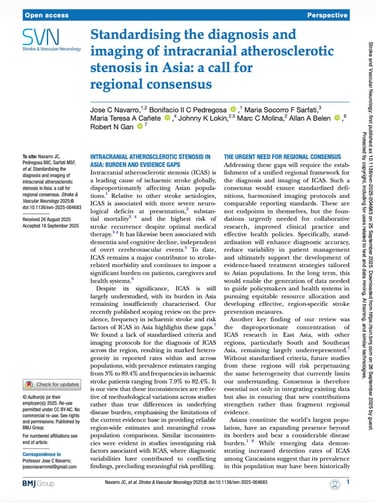
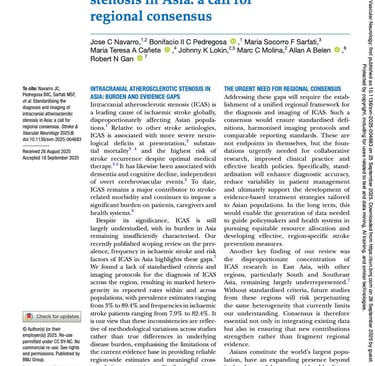
Establishing a unified regional framework for the diagnosis and imaging of intracranial atherosclerotic stenosis (ICAS) is an urgent priority in Asia. ICAS is a leading cause of ischemic stroke particularly among Asian populations, and continues to impose a significant burden across the region. Despite this, evidence from Asia remains fragmented. The absence of standardized diagnostic criteria and imaging protocols for ICAS has resulted in marked methodological inconsistencies in regional ICAS research, thereby limiting the validity and interpretability of existing data. These limitations preclude reliable region-wide estimates of disease burden, meaningful cross-population comparisons, and robust risk profiling. Ultimately, these gaps hinder consistent approaches to ICAS diagnosis and management, impede collaborative research delaying the generation of evidence-based treatment and prevention strategies, and undermine the development of equitable and effective public health policies.
What will this consensus accomplish?
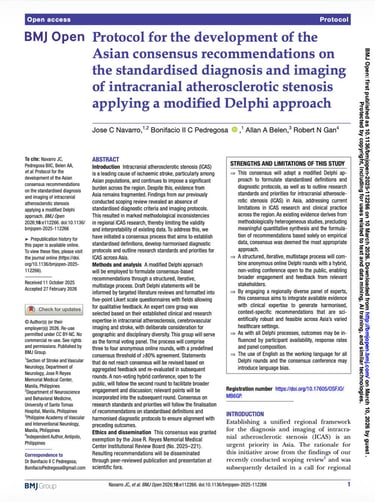
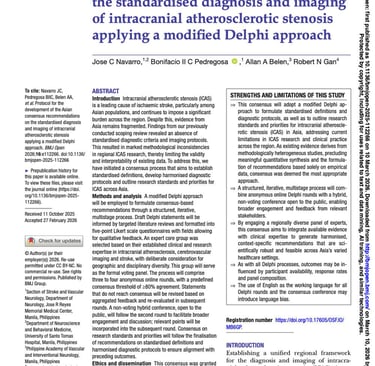
This consensus is the first region-wide initiative which brings together experts across Asia to formulate recommendations on the following important clinical issues:
To establish standardized definitions of intracranial atherosclerotic disease (ICAD) and ICAS, including thresholds for clinically significant stenosis across imaging modalities. Particular emphasis will be placed on safeguards to differentiate ICAS from non- atherosclerotic arteriopathies. The consensus will likewise seek to distinguish between symptomatic and asymptomatic disease, and clarify vaguely applied terminology relevant to ICAS research and clinical practice.
To provide tiered recommendations on the preferred diagnostic modalities for ICAS and their roles in screening and confirmatory evaluation, according to clinical indication. This consensus will set both minimum standards and ideal targets to account for the diversity of healthcare infrastructures across Asia.
To set uniform methods for quantifying stenosis and grading severity across modalities, and to standardize the documentation of other diagnostic variables relevant to ICAS.
To define methodological standards and reporting requirements for future investigations, incorporating the recommendations developed through this consensus. The consensus will also outline harmonized approaches for quantifying disease burden and evaluating risk factors, treatment strategies, and outcomes. Research priorities will be identified, with emphasis on underrepresented regions and populations across Asia.
Related Published Articles
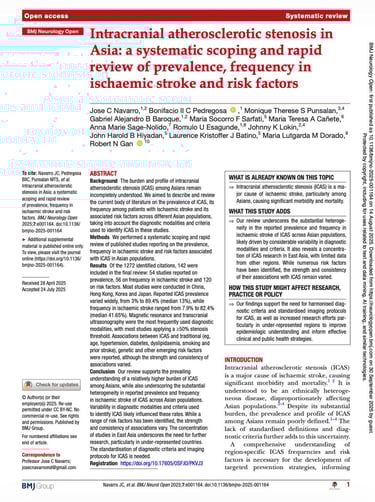
Additional information regarding this project can be accessed through the links provided below:
Connect with Us
The Philippine Academy of Vascular and Interventional Neurology
Unified by Purpose. Anchored in Science. Committed to Care.
©2026. PAVIN. All rights reserved.